Tuesday, July 16, 2013

EPA strengthens Energy Star requirements


Under the new standards, Energy Star certified refrigerators and freezers will use at least 10 percent less energy than models meeting 2014 federal minimum efficiency standards. If all refrigerators and freezers sold in the United States were to meet the updated requirements, energy cost savings would grow to more than $890 million each year and reduce annual greenhouse gas emissions by the equivalent of those from more than one million vehicles. Additionally, by recycling an old refrigerator and replacing it with a new Energy Star certified refrigerator, consumers can save from $150 to $1,100 on energy costs over the product's lifetime.


"We can all do our part in meeting the challenge of climate change," said Janet McCabe, Principal Deputy Assistant Administrator for EPA's Office of Air and Radiation. "By choosing Energy Star appliances, families can save energy, save money, and reduce carbon pollution."
Certain Energy Star refrigerators and freezers with connected features will provide consumers new convenience and energy-saving opportunities. These products will allow consumers to view real-time energy use, receive energy-related messages, such as an alert when the door has been left open, and manage appliance settings remotely. Refrigerators and freezers with connected functionality will also be "smart grid"-ready, meaning that with consumer permission, they will be able to respond to utility signals, including curtailing operations during more expensive peak demand times.

Wednesday, July 10, 2013

Let's Get Crafty! Pt. 2

CD Sun Catchers 

Looking for a fun and creative way to teach your children about renewable energy? CD Sun Catchers demonstrate the generation of energy produced by the sun, including light and heat. Keep your beautiful sun-catcher as a fun decoration for any window or room. Or, for the winter holidays, give it out as a unique, hand-made ornament!

Materials:


• Junk CDs
• Glue
• Decorations: Gems, jewels, beads, sequins
• Sandpaper
• Fishing line, cut into 2’ lengths
• Paint (any color)

Instructions:


STEP 1: Before starting, make sure the paint you use will work with the CD. Experiment with paint on a spare CD to check for adherence. Add a few drops of liquid dish soap to the paint if needed.


STEP 2: Lightly sand the CD on the side with the label in order to the dull surface.


STEP 3: Paint the sanded side. Let the paint dry.


STEP 4: Add decorations to make this sun-catcher your own! Glue sequins, jewels, or beads to either the painted or mirrored side. Let the glue dry.


STEP 5: After the glue dries, string the CD on fishing line so that it hangs freely. For extra decoration, use spare beads and jewels to string onto the fishing line before tying it off.

Enjoy your new creation!


Wednesday, July 3, 2013

Internet Energy Efficiency: NRDC Study Questions Power Drain From Routers, Modems


If there’s one thing I pride myself on, it’s practicing vigilance when it comes to making sure that I unplug any non-essential appliances and electronics when I’m not using them. As for the things that I don’t unplug on a regular basis, I make sure that they’re connected to a vampire energy-combating power strip or similar (preferably non-terrifying) device. What can I say? I like to save moola.

However, in addition to the fridge, there are a couple of electronic devices in my home that I dare not tamper with — highly essential items that I never turn off and leave plugged in 24/7: My modem and AirPort Extreme base station.

Having previously delved into the energy-guzzling nature of newfangled HD-DVR cable boxes (crazy enough, they suck more juice than Energy Star rated fridges), the Natural Resources Defense Council has now set its sights on modems and routers, devices, that like cable boxes, are ubiquitous and rarely unplugged. Collectively, Americans consume $1 billion worth of electricity per year on keeping home networking devices fired up but could potentially save a whopping $330 million in costs if they switch over to energy-efficient models.

Read Full Article...

Tuesday, June 25, 2013

What is Passive House?


Although many people cannot afford to build their own home, there are energy lessons to be learned by this new technology regarding in-home efficiency. Keeping your home properly insulated is the key to this concept. Keep your doors and windows properly sealed so it can ultimately reduce heating and cooling leakages from your home. That's money leaking from those cracks! Planting trees on the south side of your home or using blinds during the hottest part of the day are small things that can also help reduce your energy consumption! Taking lessons from revolutionary ideas can help everyone on the grid. Stay concious of your energy expenditure and stay informed!

Here is an article we found that demonstrates just that:

“Maximize your gains, minimize your losses”. These are the basic tenants of the Passive House approach. A Passive House project maximizes the energy efficiency of the basic building components inherent in all buildings; roof, walls, windows, floors and the utility systems: electrical, plumbing & mechanical. By minimizing a building's energy losses, the mechanical system is not called to replenish the losses nearly as frequently, saving resources, operational costs and pollution. Unlike any other structures, Passive House buildings maintain occupant comfort for more hours of the year without the need for mechanical temperature conditioning of the indoor air. The opposite has been the norm in this country with a history of inexpensive fuel and construction techniques with little consideration for energy losses through thermal bridging, air-infiltration, let alone being conscious of using some or even any insulation.

Thus, to minimize losses, Passive House theory is focused on insulation. The research shows that energy conservation is the most cost effective and immediate solution to global energy production and resulting global pollution concerns.


Wednesday, June 19, 2013

Energy efficiency – there’s an app for that!

Efficiency Nova Scotia is kicking-off its one-year partnership with the Discovery Centre with the release of Canada’s first energy efficiency game app: Spot it!

The game app was developed in collaboration with Emmy-winning app developer and Nova Scotian Jason Nickel and Impact. The game features 13 levels where players have to spot the difference between efficient and inefficient rooms in a typical household. At the end of each level, the game explains the differences.

“Our ultimate goal is to help make energy efficiency normal behavior,” says Leanne Hachey, director of communications and stakeholder relations. “One way to do that is to teach our children how to use energy better so they can share that knowledge with their families, present and future.

“Spot it! is a way to speak to kids about energy and efficiency in a way that’s relevant to them — and it’s fun.”


Wednesday, June 12, 2013

Let's Get Crafty!

Looking for a fun and creative way to teach your children about renewable energy? Pinwheels are a fun craft to demonstrate wind power and are easy to make! Follow these steps to get started.


Materials:


• Construction paper • Scissors • Thumbtacks • Crayons • Pencils with erasers


Instructions:


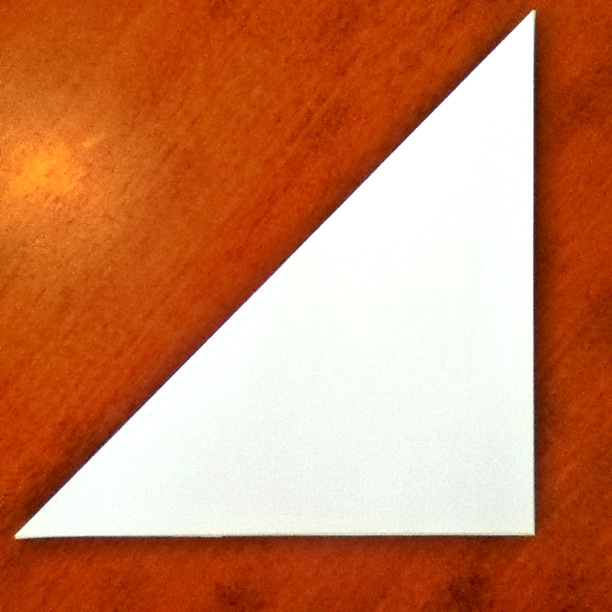
STEP 1: Cut construction paper into a square. Fold it diagonally in half (corner to corner). Open it back up and fold the paper diagonally across the other two corners. Open the paper to a flat square again. You should now have an X folded into the square.


STEP 2: Decorate all four sections of the paper on both sides. Use any colors and patterns you like.


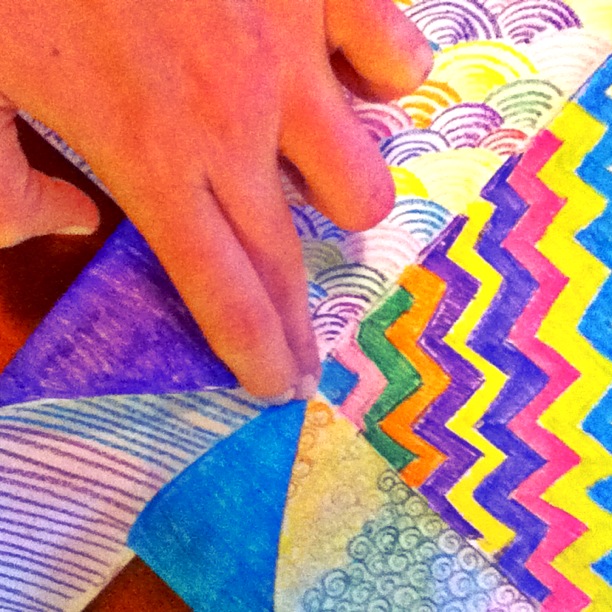
STEP 3: Cut the paper-starting at each corner-along the four fold lines. Stop cutting about a thumb's width away from the center on each line. Gently bend the long point from each cut triangle across the center.


STEP 4: In the center where the points cross, poke a thumbtack (ask an adult for help) through all the paper and then into the dowel stick or pencil. OR poke a brass paper fastener through the layers. Wrap the end of the paper fastener around a dowel stick or pen.


STEP 5: To start your pinwheels, turn the paper wheel around a few times to loosen it so it can spin. Then watch the colors dance as the breeze or your breath catches your creation. Adult assistance may be needed!  

Enjoy your new creation!


Wednesday, June 5, 2013

Europe joins race to store energy at the bottom of the ocean

By exploiting pressure at the seabed, researchers hope to create stores of energy at the o...

"Imagine opening a hatch in a submarine under water. The water will flow into the submarine with enormous force. It is precisely this energy potential we want to utilize." This is how German engineer Rainer Schramm describes his idea for storing energy under the sea. By using surplus energy to pump water out of a tank at the seabed, the water is simply let back in again when there's an energy shortfall, driving turbines as it rushes in. The deeper the tank, the more power is generated.

The technology is being developed by Schramm's company, Subhydro AS. Based in Olso, Norway for access to deeper water, the company claims to be the "first in the world to apply a specific patent-pending technology to make this possible." In fact the energy storage principle is identical to MIT's underwater hollow concrete spheres which could store surplus energy from offshore wind turbines. Subhydro also positions its tanks as a logical counterpart to offshore wind, but like MIT's technology, it could also be used to store energy from the grid.

Read more...