Wednesday, May 20, 2015

JCPB's TALO Program

What’s Take A Load Off?
Take A Load Off (TALO) participants receive a free direct load control device on their water heater. The direct load control device will reduce participants’ demand for electricity during peak energy times. The amount of electricity saved by turning off just one water heater element is relatively small; however, thousands of TALO participants could result in significant energy reduction during peak usage times. As a public power company, when Johnson City Power Board (JCPB) reduces wholesale energy costs, the savings can be passed on to you.

How does TALO work?
As an example, assume that most JCPB customers use hot water early in the morning. Once water is used, the water heater fills with cool water and the elements heat the water for the next use. However, after morning showers, many of us will not need additional hot water again for several hours. It is during this time that JCPB may activate the TALO water heater switch to postpone heating the water for a brief time. Customers will still have hot water during these times. Electric water heaters only operate a few hours a day to keep water at a constant temperature based on the thermostat setting. The water stays hot in an insulated tank until needed. Events are typically called only a few hours each month so the impact on the water heating is limited. Events typically last 2 hours, but could potentially last up to 6 hours.

How do I know if I qualify as a TALO participant?
In order to qualify to participate in the program, you must be the owner of the home/condo unit and your name must be on the electric account. In addition, the water heater must be electric and the minimum tank size should be greater than 38 gallons. Customers may install multiple devices provided there are multiple qualifying water heaters located within the home (must be served by same account).

These exclusions apply:
  •      Home not on permanent foundation.
  •      Water heater in poor condition, old, or inaccessible.
  •      Tank size is less than 38 gallons.
  •      Unit is a heat pump water heater or instantaneous water heater.
  •      Unit is a gas water heater.
  •      *Other exclusions may apply.

What are the benefits of TALO?
  •      One-time $40 incentive for each TALO device 
  •      installed (credit on bill) at a single-family home 
  •      Free water heater element replacement
  •      Free water heater thermostat replacement

How do I sign up?
Complete the form on the back of this flyer, sign, and return.
Return via the following ways:
1.  Email:
          Scan, save as a PDF, and email to energyservices@jcpb.com.
2.  Mail:
          JCPB
          Attn: Marketing/TALO
          PO Box 1636
          Johnson City,  TN 37605

How do I report a TALO issue? 
Contact JCPB customer service at (423) 952-5272 (JCPB), option 6.
For more details, call (423) 952-5272 or visit www.jcpb.com.


Tuesday, November 25, 2014

LED Christmas Lights


     It’s that time of year again! It’s the holiday season, and it is almost time to start decorating. If you have been thinking about purchasing new Christmas lights or replacing your old ones, please consider the following benefits of LED Christmas lights.

     First, LED Christmas lights have a drastically longer lifespan than incandescent lights. LEDs are rated for 50,000 to 200,000 hours while incandescent lights are rated for only 3,000 hours. LEDs also have no burn out factor unlike incandescents. Another element adding to the long life of LED lights is their plastic construction which lends itself to being more durable, easily stored, and generally unbreakable. The same cannot be said for their glass, incandescent counterparts. Traditionally, incandescents are painted glass that have the problem of breaking, chipping, or cracking. Instead of painted glass, LEDS emit color through diodes which means LEDS stay brighter for longer and have little chance of breaking. LED lights’ long life translates to less yearly replacement which means cost savings. LED lights are also good for the environment because their long life means less refuse going into the landfill.

     Second, LEDs are more versatile than traditional incandescent lights. More strings of LED lights can be safely connected than incandescents. Up to 28 LED 5MM Mini lights can be connected while only 10 strings of standard mini lights can be connected. LED Christmas lights also offer much more versatile, festive functions than incandescent lights due to the LEDs’ diodes and integrated circuit boards. LEDs can offer dimming functions, morphing lights, and color changes which will add much more excitement to your festive décor.

     Third, LED lights are much cooler (temperture) than incandescents. Because LED holiday lights are cool to the touch, replacing your incandescents with LED lights can decrease the chances of home fires. The National Fire Prevention Association says Christmas trees were the cause of an estimated average of 300 reported home structure fires from 2000-2004. This small change is also a holiday-time, safety benefit.

     Fourth and most importantly, LED Christmas lights save 80-90% energy compared to incandescent Christmas lights.

     So if you are looking to replace your old lights or want to try something new, please consider LED Christmas lights for this holiday season. Making the change is small, but the benefits will be huge for you and your family.

We wish you a very happy, holiday season from your friends at the Johnson City Power Board! Check out www.jcpb.com for more holiday safety tips!


Monday, August 4, 2014

Downed Power Lines


In the recent months, there have been many strong storms in the area that have caused significant power outages. In some instances, the storms have even caused downed power lines. In this PowerPlug, we will discuss some tips of how to handle this dangerous situation.


·        Tip Number One: If you see a downed power line, do not touch it or go near it! There is no way to tell if a downed line is energized by sight so keep at least 35 feet away to stay safe.
·        Tip Number Two: Do not try to pick up or move the downed line with any type of object or material. Certain materials can conduct electricity which will travel through the object to shock you so it is best to not to attempt to manipulate the fallen line.
·        Tip Number Three: If the ground is wet or there are puddles around the fallen lines make sure to leave the area. Water is a conductor so its presence will make the situation even more dangerous. 
·        Tip Number Four: Do not drive over downed power lines. If you accidently do, do not exit the car. Stay inside the vehicle and call for help if possible.
·        Tip Number Five: If you are trapped in a vehicle that has driven over power lines or power lines have fallen on top of the vehicle, do not leave the vehicle unless it is an extreme emergency such as a fire. In that case, you will need to jump out of the vehicle with both feet at the same time. Do not touch the vehicle and the ground at the same time! Then proceed to shuffle away from the vehicle.
·        Tip Number Six: This is the most important tip! When you see a downed power line make sure to call 911 and the Johnson City Power Board to report it!


This concludes this month’s PowerPlug. Thanks for reading! Have a good day!

Thursday, July 17, 2014

Power Outages and Squirrels


On this PowerPlug, we are going to discuss the number one cause of power outages and some outage tips. Contrary to popular belief, the number one cause of power outages is not severe weather storms, but animals such as squirrels, birds, and snakes interfering with electrical equipment. This problem increases during the summer months as these vermin populations tend to grow during this season.
We’ve all seen squirrels and birds climbing or sitting on utility poles, power lines, and transformers. There is not much that can be done to stop this, but JCPB installs animal guards on transformer bushings to help keep them from getting into the wiring connections.  Although these devices work some of the time, they do not work all the time. Somehow, someway, those cute critters get by the guards and cause unwanted power outages. Another cause of outages is trees. Remember: plant the right tree in the right place. Avoid planting tall growing trees near power lines.

Electric service is extremely reliable. Power interruptions do not occur frequently and usually do not last for long periods of time. However, for various reasons power interruptions do occur, and individuals may lessen the inconvenience and discomfort by preparing ahead of time for such unforeseen circumstances.

Consider these tips:

1.      Number One: Store candles, kerosene lamps, or flashlights in convenient areas for easy access and use.
2.      Number Two: Look to see if the neighbors’ lights are off. If the neighbors’ lights are not off, the problem may be confined to your home.
3.      Number Three: If possible, check the outage map on JCPB.com to see if you are within an affected area.
4.      Number Four: Check fuses and breakers. If there is a problem with the fuses or breakers, this may indicate that the problem is confined to your home.
5.      Number Five: Turn off all electrical appliances that were on; especially heat pumps, air-conditioners, or electric heating. This precautionary measure will aid in preventing the system from overloading once power is restored.
6.      Number Six: Call JCPB’s automated phone system to report your power interruption. Consider putting this number in a convenient location for easy access: 952-JCPB (5272). JCPB's automated phone systems helps to better serve customer calls, especially during large power outages. It is VERY IMPORTANT that we have the correct information concerning your electric account. Please, check your monthly invoice to make sure that the correct phone number is listed for your account. If the phone number is incorrect, space has been provided on the payment stub for you to write the correct number and return to our attention.
7.      Number Seven: Tune in to social media for JCPB updates on Facebook and Twitter. You may also turn on your battery-operated portable radio and listen for messages from JCPB. If possible, call your neighbors and find out if they have information about the emergency.
8.      Number Eight: If extreme conditions exist and power outages are widespread, you may consider making alternate arrangements until power is restored.
9.      Number Nine: It is important to check on older friends, neighbors, and relatives during emergency situations; such as, extreme power interruptions. You may even consider assisting them in making alternate arrangements if the power interruption is anticipated to last for an extended period of time.

This concludes this month’s PowerPlug. To listen to the PowerCast of this topic, go to http://www.jcpb.com/PowerCast/ Thanks for reading! Have a good day!

Wednesday, January 29, 2014

Sugar batteries could be greener, cheaper and store more energy than lithium-ions

Even today's best rechargeable lithium batteries do lose their ability to hold a charge after a while, and are considered toxic waste once discarded. In just a few years, however, they may be replaced by batteries that are refillable and biodegradable, and that will also have a higher energy density yet a lower price ... and they'll run on sugar.

"Sugar is a perfect energy storage compound in nature," says Virginia Tech's Prof. Y.H. Percival Zhang, who is leading the research. "So it's only logical that we try to harness this natural power in an environmentally friendly way to produce a battery."

Zhang's isn't the first experimental sugar battery, although he claims that its energy density is "an order of magnitude higher than others."

Read full article HERE...

Thursday, January 16, 2014

Worried About High Energy Bills?


In case you didn't know, it's been REALLY cold lately. If you have an electric heat pump, I'd be willing to bet that you recently heard it groaning throughout the night as it worked overtime to heat your home - if you're lucky! I'd also be willing to bet that your emergency heat kicked in to aid your heat pump in doing the job it is ideally suited for at above freezing temperatures. Unfortunately, that emergency function is resistive heat, a relatively inefficient method of heating a metal coil by running electricity through it - think wall heater coils glowing red. While emergency heat is an effective stop gap to compensate for an electric heat pump's shortfalls in extreme low temperatures, it is not best suited for extended use and uses much more electricity than the heat pump's normal direct air, heat exchanging technology.

Essentially, when it gets really cold outside and you set your thermostat to stay warm inside, your energy usage and energy charges are sure to go up; especially if it's single digit temperatures and you use an electric heat pump.

So what does this have to do with JCPB's Rolling Budget Billing? Here's the thing: customers that sign up for rolling budget with JCPB pay the average billing amount for the last twelve months each month. This means that if there is a spike in their energy charges, they won't have to bite the bullet and bear the full burden the next month. Rather, a rolling budget billing customer will pay an amount based on that high month averaged in with the previous eleven months of usage. This methodology prevents drastic fluctuations in monthly energy charges while not requiring a deficit or surplus "settle up" to occur as is required with our fixed budget billing option. Brilliant!

If you are worried about high energy bills this winter and need help spreading out the burden of cost, call in, log on, or come by today to inquire about our rolling budget billing option today.

Here are some helpful resources to get you started:

Easy Pay Options on jcpb.com

JCPB Customer Service: 423-952-JCPB (5272)


Thursday, January 2, 2014

Power From The People: Human Energy Will Fuel NYC’s New Year’s Eve Ball Drop

A 11,875-pound geodesic sphere, covered in 2,688 Waterford crystals, illuminated by 32,256 LED bulbs, powered completely by human energy.
That is what the venerated Times Square New Years Eve ball will look like this year, according to a Friday press release from the Times Square Alliance. The human energy will come from six stationary Citi Bike bicycles set up in Midtown, that people were invited to ride this weekend to generate kinetic energy for the ball.

The energy, which is collected from the bikes and stored in batteries, will eventually be transferred to the New York City power grid to offset the energy needed to light and eventually drop the New Year’s Eve Ball, according to the release.

“With the year’s biggest party being powered by Citi Bike pedals, the world is in for an even more electrifying experience when the ball drops,” city Transportation Commissioner Janette Sadik-Khan said in a statement.

Read full article HERE...

Wednesday, December 18, 2013

LED Holiday Lights Are Brighter, Safer, and Save Money Over Time!


Shopping for lights can a be a tricky situation. In the past, it seemed like every year my family would need to go out and buy new lights when the ones from last year kicked the bucket. But the technology has improved over time, and fortunately for the wallet, the prices have begun to drop on the best lights, too. The debate between buying incandescent lights and light-emitting diode lights (LEDs) is something I’ve debated more and more each passing year. The facts are indisputably in favor of LEDs; they run with a much lower wattage (and use 80 percent less energy as a result), last much, much longer, emit much less heat than conventional incandescent bulbs, and the best part – when a LED bulb stops working, it doesn’t kill the rest of the strand! For a really cool infographic comparing incandescent lights to LEDs, Daily Infographic has the topic covered.

But the price of LEDs, which were at one point at least ten times more expensive than incandescent holiday lights, was a major issue on my limited budget. The tides have begun to turn though, as many major websites and retailers are embracing the newer lights at a more affordable cost. A quick Amazon.com search for 100 lights of each type shows an incandescent set starting at $6.99, while a LED set is just over $22.

Read full article HERE...

Wednesday, December 11, 2013

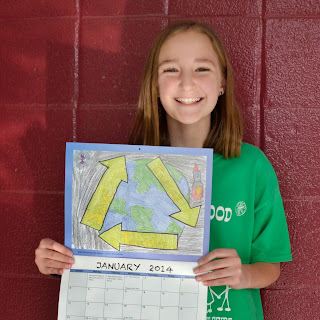
POWERFUL DRAWINGS: Students’ artwork becomes JCPB calendar

By JENNIFER SPROUSE
Press Staff Writer
jsprouse@johnsoncitypress.com


Back Row: Ed Basconi (KitBook Co-Creator); Carol Gentry (Lake Ridge 4th Grade Teacher); Julia Henry (Lake Ridge 4th Grade Teacher); Nicole Webb (Lake Ridge 4th Grade Teacher); Anthony Padelski (Lake Ridge 4th Grade Teacher); Jeff Dykes (JCPB CEO); Middle Row: John Phillips (Lake Ridge Principal); Abbie Underwood; Marelyn Damian Castro; Maggie Shurtliff; Hanna Boyd; Ann Ferenbach (Lake Ridge Art Teacher) Front Row: Ella Overbay; Claire Rountree; Sophie Carter (*all students in photo are in 4th grade at Lake Ridge Elementary*)
When it comes to power and energy conservation, fourth-graders at Lake Ridge Elementary School have a few suggestions.

Participating in the Johnson City Power Board’s “Imagination Power” calendar art contest, those students, as well as other fourth and fifth graders in the Power Board’s service territory, drew artwork to show ways to save power, as well as power alternatives to decrease overall usage.

Drawings were submitted from each of the participating schools to the Power Board, and a committee was established to select 12 of them to appear in the annual contest calendar. At the contest’s end, the school with the most student drawings in the calendar would then win a grand prize of 25 custom edition KitBook textbooks, which are an interactive tool designed to teach fourth and fifth-graders about electrical circuits.

Lake Ridge was this year’s grand prize-winning school, with seven drawings selected for the contest. On Friday, Power Board CEO Jeff Dykes visited the school for the presentation of the calendars as well as the KitBooks.

Fourth-grader Abbie Underwood, 10, in Julia Henry’s class, enthusiastically pointed out her multi-step drawing of a power-saving green- house.

“Our task was to create a way to conserve energy in a picture and label it,” Underwood said. “I started mostly just thinking about a greenhouse and the fact that it would be more power conserving to not use gas and light to go to the grocery store.”

In the picture, Underwood drew a cow, a pig, solar panels, two rain collectors, four rain buckets, an apple tree, green beans and a berry bush, while also illustrating how to use solar energy and rainfall to power and provide for a greenhouse.

On the drawing she wrote “why should we waist (sic) gas to go to the store, when we can really just grow our own food.”

Underwood said she was excited to have her picture selected for the contest and said she enjoyed the project. “You could let your imagination go wild,” she said.

Fellow fourth-grader Claire Rountree, 10, in Nicole Webb’s class, drew her conservation picture about an alternative way of styling hair without using electricity.

“I curl my hair a lot. I use a lot of energy,” Rountree said.

In her picture, she illustrates in four sequences that if you braid your hair wet and sleep on it overnight, it produces curls the next morning.

From learning in her science class and through the project how much power she was using for just that task, Rountree said she’s tried out the hairstyling trick and has started doing that now instead of using a curling iron.

She said her class was shown a PowerPoint presentation for the project, which did help to get the creativity flowing, but said she “learned a lot of energy is wasted when things are plugged in.” Rountree also added that being selected for the calendar was “funny because I didn’t really expect it and so I’m really excited.”

Lake Ridge’s fourth-grade team partnered with the school’s art instructor, Ann Ferenbach, to complete pictures for the contest.“This is a collaborative program that we do with the Power Board every year,” Ferenbach said.

“It focuses on math and science. We gathered our children together and really talked about the process. They translated their thoughts through an illustration. It really felt like a group effort. It was very cohesive and collaborative.”

Teachers Nicole Webb and Anthony Padelski said they were proud of the pictures their kids produced for the contest.

“We try to get our kids to apply this to real-life situations. How can they save energy? How can they use less energy?” Webb said. “The kids came up with some really great ideas that I couldn’t even think of.”

Padelski added, “We’re a testing system, a testing society, so it was surprising and it was great to see (the students) visualize the practicality of what we’re teaching them in the classroom.”

Dykes, who met and took pictures with the contest winners, said the calendar program was started as a way to get more involved with the schools in the area, as well as to educate the younger generation on alternative energies and opportunities in the industry.

“You never know where the next great idea’s going to come from,” he said. “We really want to do everything we can to visit the schools, to help with the science teachers and bring that technology down to the level where fourth- and fifth-graders can really understand what they see when they’re out in the world.”

Lake Ridge Principal John Phillips said he was excited for his teachers and students involved in the Power Board’s contest, as well as the addition of the KitBooks to the school’s science curriculum.

“I’ve looked at the calendars in the past and we’ve had a winner here and there. To have this many students participate and have this many winners, it’s just phenomenal,”

Phillips said.“There’s so much (talk) today about STEMs –– science, technology, engineering and math and this is one of those projects that pulls almost all of that together for us with the students. I’m just real proud of all of them.”

Copies of the 2014 Imagination Power Calendar are available to all JCPB customers and may be picked up at the utility's customer service center at 2600 Boones Creek Rd. during normal business hours while supplies last.

Featured artists with their works pictured below:
Cierra Lemerond, 4th Grade - Lamar Elementary (COVER WINNER)
Katie McKinney, 5th Grade - Lamar Elementary
Marelyn Damian Castro, 4th Grade - Lake Ridge Elementary
Alyssa Bordies, 4th Grade - Gray Elementary
Grace Jenkins, 4th Grade - Gray Elementary
Naomi Edwards, 4th Grade - Mountain View Elementary

Ella Overbay,  4th Grade – Lake Ridge Elementary

Hana Boyd, 4th Grade - Lake Ridge Elementary

Abbie Underwood, 4th Grade - Lake Ridge Elementary

Maddie Shurtliff, 4th Grade - Lake Ridge Elementary
Chantal Jackson, 4th Grade - Jonesborough Elementary
Claire Rountree, 4th Grade - Lake Ridge Elementary
Sophie Carter, 4th Grade - Lake Ridge Elementary
Ben Carter, 5th Grade - Ridgeview Elementary
Ed Basconi, KitBook Co-Creator, introduces Lake Ridge students to the KitBook